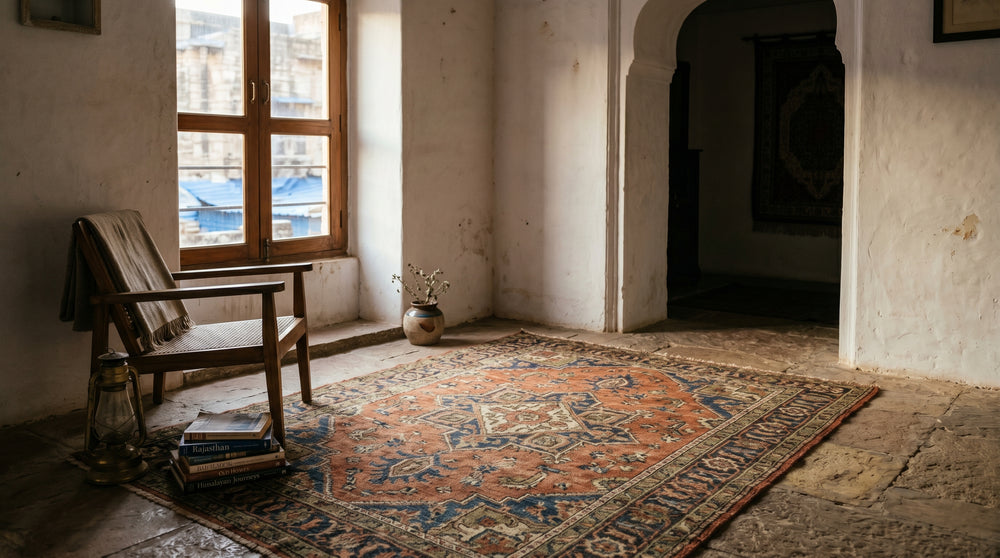
Jaipur has long been associated with colour, pattern, and ornament - yet its deeper significance lies not in how its textiles look, but in how they are made, and how knowledge has been carried through its workshops across generations. The city developed as a centre of textile production because it cultivated relationships between hands, materials, and trade routes that allowed craft to circulate without losing its identity. In this way, Jaipur was never simply a place of output, but a place of translation - where local skill learned how to speak to distant markets while remaining rooted in its own rhythms. This history matters today because it offers a model for how handmade objects can move across the world without becoming detached from their origins.
A flattened version of the tradition.
The global appetite for Indian rugs has grown steadily, yet this demand has often been satisfied through systems that strip away the very qualities that made these pieces desirable in the first place. As orders became larger and timelines shorter, workshops were pressured to simplify designs, substitute materials, and prioritise volume over attention. What travelled abroad under the label of Indian craftsmanship increasingly resembled a flattened version of the tradition - one that looked correct but lacked the depth that comes from slow, skilled labour. In this process, the rug survived as a product, but its lineage became faint.
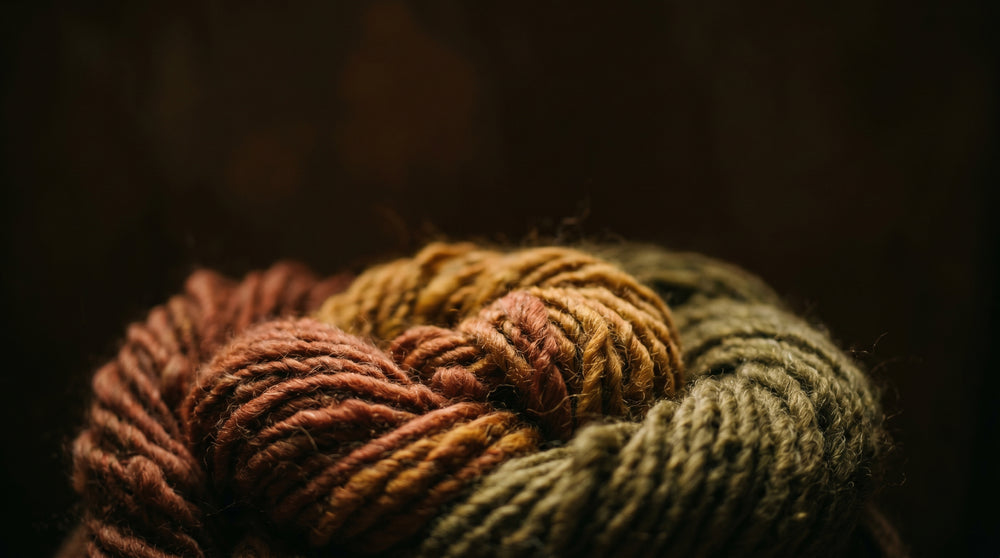
To understand what is lost in such translation, it is important to recognise that a rug is not merely a surface, but a convergence of relationships between wool, dye, loom, and hand. Each of these elements responds to place in subtle ways, and it is this responsiveness that gives handmade rugs their distinctive character. The challenge is not how to export rugs, but how to allow them to travel while remaining connected to the environments that shaped them.